Calendar
| Sun | Mon | Tue | Wed | Thu | Fri | Sat |
|---|---|---|---|---|---|---|
| Sunday Bhajan and Satsang 11:30 am Sunday Bhajan and Satsang Dec 7 @ 11:30 am – 1:00 pm 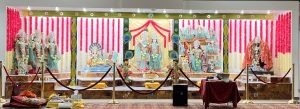 Every Sunday, we have SATSANG (Bhajans, kirtans, Kathas etc.) From 11:30 AM – 01:00 PM followed by Aarti and Prasadam (Lunch) | ||||||
| Sunday Bhajan and Satsang 11:30 am Sunday Bhajan and Satsang Dec 14 @ 11:30 am – 1:00 pm Every Sunday, we have SATSANG (Bhajans, kirtans, Kathas etc.) From 11:30 AM – 01:00 PM followed by Aarti and Prasadam (Lunch) | DURGA MATA KI CHOWKI 6:00 pm DURGA MATA KI CHOWKI Dec 20 @ 6:00 pm – 9:30 pm 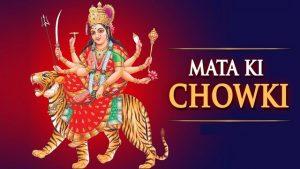 If you would like to host the Mata Ki Chowki at Shree Radhey Shyam Temple, Contact : Raja Sharma 708-822-6656 Maa Durga is revered as the Mother Goddess among the Hindu... | |||||
| Sunday Bhajan and Satsang 11:30 am Sunday Bhajan and Satsang Dec 21 @ 11:30 am – 1:00 pm Every Sunday, we have SATSANG (Bhajans, kirtans, Kathas etc.) From 11:30 AM – 01:00 PM followed by Aarti and Prasadam (Lunch) | ||||||
| Sunday Bhajan and Satsang 11:30 am Sunday Bhajan and Satsang Dec 28 @ 11:30 am – 1:00 pm Every Sunday, we have SATSANG (Bhajans, kirtans, Kathas etc.) From 11:30 AM – 01:00 PM followed by Aarti and Prasadam (Lunch) |
Every Sunday, we have SATSANG (Bhajans, kirtans, Kathas etc.)
From 11:30 AM – 01:00 PM followed by Aarti and Prasadam (Lunch)
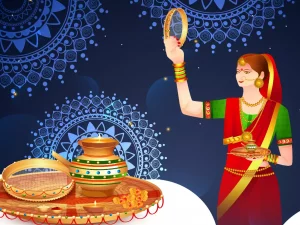
Karwa Chauth coincides with Sankashti Chaturthi a fasting day observed for Lord Ganesha. The fasting of Karwa Chauth and its rituals are observed by married women for the long life of their husband. Married women worship Lord Shiva and His family including Lord Ganesha and break the fast only after sighting and making the offerings to the moon. The fasting of Karwa Chauth is strict and observed without taking any food or even a drop of water after sunrise till the sighting of the moon in the night.
Karwa Chauth day is also known as Karak Chaturthi (करक चतुर्थी). Karwa or Karak refers to the earthen pot through which water offering, known as Argha (अर्घ), is made to the moon. Karwa is very significant during Puja and it is also given as Dan to the Brahmin or any eligible woman.
Every Sunday, we have SATSANG (Bhajans, kirtans, Kathas etc.)
From 11:30 AM – 01:00 PM followed by Aarti and Prasadam (Lunch)

Significance of Ahoi Ashtami
Rituals and Observances
-
Fasting: Mothers observe a strict fast throughout the day, often abstaining from water, and break the fast only after sighting the stars or the moon.
-
Puja: The puja involves worshipping Goddess Ahoi, where mothers pray for the health and longevity of their children. The rituals include drawing the face of a cub, which symbolizes the goddess, and offering prayers with utmost devotion.
-
Cultural Importance: Ahoi Ashtami is particularly significant for childless couples and is believed to be auspicious for those seeking to conceive.
Dhantrayodashi which is also known as Dhanteras is the first day of five days long Diwali festivities. On the day of Dhantrayodashi, Goddess Lakshmi came out of the ocean during the churning of the Milky Sea. Hence, Goddess Lakshmi, along with Lord Kubera who is the God of wealth, is worshipped on the auspicious day of Trayodashi. However, Lakshmi Puja on Amavasya after two days of Dhantrayodashi is considered more significant.
If you would like to host the Mata Ki Chowki at Shree Radhey Shyam Temple, Contact : Raja Sharma 708-822-6656
Maa Durga is revered as the Mother Goddess among the Hindu Goddesses. Mata Ki Chowki is a short-duration Kirtan that can be done at any time of day, at any time of year. The essence behind performing the Mata Ki Chowki is to fulfil one’s wishes. This Puja ceremony involves the gathering of many worshipers who spend three hours singing hymns in her praise in order to please the Goddess so that she can grant them their wishes. Mata ki chowki includes kirtans and bhajans which are performed in the respect to Mata Durga, Mata Laxmi, Mata Kaali, Saraswati, and Annapurna.
Kali Chaudas, also known as Naraka Chaturdashi, is a significant Hindu festival. It typically falls the day before Diwali and is also referred to as Roop Chaudas, Choti Diwali, or Narak Nivaran Chaturdashi.
🌑 Meaning and Mythology
- “Kali” means dark or eternal, and “Chaudas” means fourteenth—referring to the lunar date.
- The day commemorates Lord Krishna’s victory over the demon Narakasura, symbolizing the triumph of good over evil.
- In some traditions, Goddess Kali is worshipped for her fierce power to destroy negativity and evil forces.
🔱 🪔 Rituals and Celebrations
- Early morning rituals include bathing, lighting lamps (diyas), and offering prayers.
- Oil, flowers, and sandalwood are used in puja ceremonies.
- Homes are decorated with rangoli, candles, and lights to ward off evil.
- Traditional foods like Khoya sweets, puffed rice, and festive dishes are shared with loved ones.
🧘♀️ Deities Worshipped
- Goddess Kali, Lord Krishna, Lord Ganesha, and Goddess Lakshmi are commonly worshipped.
- Lighting a lamp for Yama, the god of death, is believed to protect from suffering in the afterlife.
Every Sunday, we have SATSANG (Bhajans, kirtans, Kathas etc.)
From 11:30 AM – 01:00 PM followed by Aarti and Prasadam (Lunch)
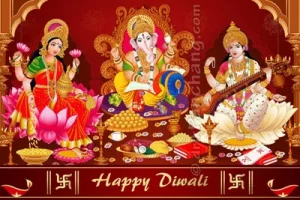
The third day of Diwali: Lakshmi Puja on Diwali
This is the day when worship unto Mother Lakshmi is performed. Hindus cleanse themselves and join with their families and their Pandit (priest) and they worship the divine Goddess Lakshmi to achieve the blessings of wealth and prosperity, the triumph of good over evil and light over darkness.
HAPPY DIWALI 💥✨
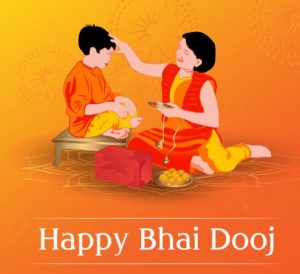
The fifth day of Diwali: Bhai Duj
The fifth day of the Diwali is called Bhai teeka. This is the day after Goverdhan Pooja is performed and normally two days after Diwali day. It is a day dedicated to sisters. Many moons ago, in the Vedic era, Yama (Yamraj, the Lord of death) visited his sister Yamuna on this day. He gave his sister a Vardhan (a boon) that whosoever visits her on this day shall be liberated from all sins. They will achieve Moksha or final emancipation. From then on, brothers visit their sisters on this day to enquire of their welfare.
This day marks the end of the five days of Deepavali celebrations. This is also known as Bhai fota among Bengalis. Bhai fota is an event especially among Bengalis when the sister prays for her brother’s safety, success and wellbeing.