Calendar
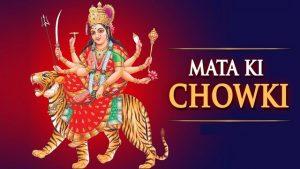
If you would like to host the Mata Ki Chowki at Shree Radhey Shyam Temple, Contact : Raja Sharma 708-822-6656
Maa Durga is revered as the Mother Goddess among the Hindu Goddesses. Mata Ki Chowki is a short-duration Kirtan that can be done at any time of day, at any time of year. The essence behind performing the Mata Ki Chowki is to fulfil one’s wishes. This Puja ceremony involves the gathering of many worshipers who spend three hours singing hymns in her praise in order to please the Goddess so that she can grant them their wishes. Mata ki chowki includes kirtans and bhajans which are performed in the respect to Mata Durga, Mata Laxmi, Mata Kaali, Saraswati, and Annapurna.
All nine forms of Goddess Durga are worshipped during Maha Ashtami Puja.
Young unmarried girls, being treated as Goddess Durga itself, are also worshipped on Maha Ashtami. Worshipping of young girls during Durga Puja is known as Kumari Puja. In many regions Kumari Puja is done during all nine days of Durga Navratri. Kumari Puja on a single day during Durga Puja is preferred on Maha Ashtami.
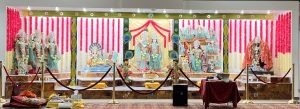
Every Sunday, we have SATSANG (Bhajans, kirtans, Kathas etc.)
From 11:30 AM – 01:00 PM followed by Aarti and Prasadam (Lunch)

Vijayadashami is celebrated as victory of Lord Rama over Demon Ravana and also triumph of Goddess Durga over the buffalo Demon Mahishasura. Vijayadashami is also known as Dussehra or Dasara. In Nepal Dasara is celebrated as Dashain.
Every Sunday, we have SATSANG (Bhajans, kirtans, Kathas etc.)
From 11:30 AM – 01:00 PM followed by Aarti and Prasadam (Lunch)
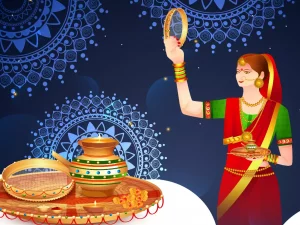
Karwa Chauth coincides with Sankashti Chaturthi a fasting day observed for Lord Ganesha. The fasting of Karwa Chauth and its rituals are observed by married women for the long life of their husband. Married women worship Lord Shiva and His family including Lord Ganesha and break the fast only after sighting and making the offerings to the moon. The fasting of Karwa Chauth is strict and observed without taking any food or even a drop of water after sunrise till the sighting of the moon in the night.
Karwa Chauth day is also known as Karak Chaturthi (करक चतुर्थी). Karwa or Karak refers to the earthen pot through which water offering, known as Argha (अर्घ), is made to the moon. Karwa is very significant during Puja and it is also given as Dan to the Brahmin or any eligible woman.

Significance of Ahoi Ashtami
Rituals and Observances
-
Fasting: Mothers observe a strict fast throughout the day, often abstaining from water, and break the fast only after sighting the stars or the moon.
-
Puja: The puja involves worshipping Goddess Ahoi, where mothers pray for the health and longevity of their children. The rituals include drawing the face of a cub, which symbolizes the goddess, and offering prayers with utmost devotion.
-
Cultural Importance: Ahoi Ashtami is particularly significant for childless couples and is believed to be auspicious for those seeking to conceive.
Every Sunday, we have SATSANG (Bhajans, kirtans, Kathas etc.)
From 11:30 AM – 01:00 PM followed by Aarti and Prasadam (Lunch)
Dhantrayodashi which is also known as Dhanteras is the first day of five days long Diwali festivities. On the day of Dhantrayodashi, Goddess Lakshmi came out of the ocean during the churning of the Milky Sea. Hence, Goddess Lakshmi, along with Lord Kubera who is the God of wealth, is worshipped on the auspicious day of Trayodashi. However, Lakshmi Puja on Amavasya after two days of Dhantrayodashi is considered more significant.