Calendar
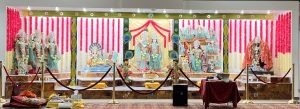
Every Sunday, we have SATSANG (Bhajans, kirtans, Kathas etc.)
From 11:30 AM – 01:00 PM followed by Aarti and Prasadam (Lunch)
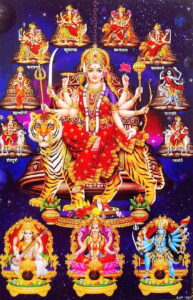
Navaratri Devi Chowki is a special devotional event held during the Navaratri festival, which is dedicated to worshiping the nine forms of the goddess Durga. During this event, devotees gather to sing bhajans (devotional songs), perform aarti (ritual of worship with light), and offer prayers to the goddess. It’s a time of great spiritual significance and celebration.
The nine forms of Goddess Durga, collectively known as Navadurga, are worshipped during the Navaratri festival. Each form represents a different aspect of the goddess and has unique attributes and significance:
- Shailaputri: Known as the “Daughter of the Mountain,” she is the embodiment of the collective power of Brahma, Vishnu, and Shiva. She rides a bull and carries a trident and a lotus.
- Brahmacharini: This form represents penance and austerity. She holds a rosary and a water utensil, symbolizing devotion and wisdom.
- Chandraghanta: Known for her bravery, she has a golden complexion and rides a tiger. She has ten hands, each holding a weapon, and a crescent moon on her forehead.
- Kushmanda: She is believed to be the creator of the universe, bringing light to the dark cosmos. She rides a lion and has eight or ten hands holding various weapons and holy objects.
- Skandamata: The mother of Skanda (Kartikeya), she represents motherhood and nurturing. She rides a lion and holds her son in her lap.
- Katyayani: Born to the sage Katyayana, she is a warrior goddess who rides a lion and has four hands, each holding a weapon.
- Kalaratri: Known as the dark and fierce form of Durga, she destroys ignorance and removes darkness. She rides a donkey and has a dark complexion.
- Mahagauri: Representing purity and serenity, she has a fair complexion and rides a bull. She is often depicted in white clothes.
- Siddhidatri: The goddess of supernatural powers and healing, she sits on a lotus and has four hands. She grants wisdom and insight12.
Each of these forms is celebrated on a different day of Navaratri, with specific rituals and prayers dedicated to them
Every Sunday, we have SATSANG (Bhajans, kirtans, Kathas etc.)
From 11:30 AM – 01:00 PM followed by Aarti and Prasadam (Lunch)
Every Sunday, we have SATSANG (Bhajans, kirtans, Kathas etc.)
From 11:30 AM – 01:00 PM followed by Aarti and Prasadam (Lunch)
Every Sunday, we have SATSANG (Bhajans, kirtans, Kathas etc.)
From 11:30 AM – 01:00 PM followed by Aarti and Prasadam (Lunch)
Every Sunday, we have SATSANG (Bhajans, kirtans, Kathas etc.)
From 11:30 AM – 01:00 PM followed by Aarti and Prasadam (Lunch)
Every Sunday, we have SATSANG (Bhajans, kirtans, Kathas etc.)
From 11:30 AM – 01:00 PM followed by Aarti and Prasadam (Lunch)
Every Sunday, we have SATSANG (Bhajans, kirtans, Kathas etc.)
From 11:30 AM – 01:00 PM followed by Aarti and Prasadam (Lunch)
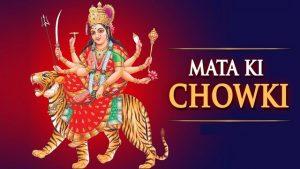
If you would like to host the Mata Ki Chowki at Shree Radhey Shyam Temple, Contact : Raja Sharma 708-822-6656
Maa Durga is revered as the Mother Goddess among the Hindu Goddesses. Mata Ki Chowki is a short-duration Kirtan that can be done at any time of day, at any time of year. The essence behind performing the Mata Ki Chowki is to fulfil one’s wishes. This Puja ceremony involves the gathering of many worshipers who spend three hours singing hymns in her praise in order to please the Goddess so that she can grant them their wishes. Mata ki chowki includes kirtans and bhajans which are performed in the respect to Mata Durga, Mata Laxmi, Mata Kaali, Saraswati, and Annapurna.