Calendar
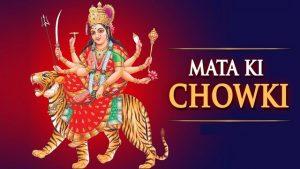
If you would like to host the Mata Ki Chowki at Shree Radhey Shyam Temple, Contact : Raja Sharma 708-822-6656
Maa Durga is revered as the Mother Goddess among the Hindu Goddesses. Mata Ki Chowki is a short-duration Kirtan that can be done at any time of day, at any time of year. The essence behind performing the Mata Ki Chowki is to fulfil one’s wishes. This Puja ceremony involves the gathering of many worshipers who spend three hours singing hymns in her praise in order to please the Goddess so that she can grant them their wishes. Mata ki chowki includes kirtans and bhajans which are performed in the respect to Mata Durga, Mata Laxmi, Mata Kaali, Saraswati, and Annapurna.
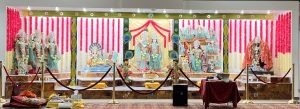
Every Sunday, we have SATSANG (Bhajans, kirtans, Kathas etc.)
From 11:30 AM – 01:00 PM followed by Aarti and Prasadam (Lunch)
Every Sunday, we have SATSANG (Bhajans, kirtans, Kathas etc.)
From 11:30 AM – 01:00 PM followed by Aarti and Prasadam (Lunch)
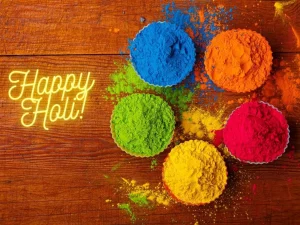
Holi ( /ˈhoʊliː/), also known as the Festival of Colours, the Festival of Spring, and the Festival of Love, is an ancient Hindu religious festival and one of the most popular festivals in Hinduism. It celebrates the eternal and divine love of Radha Krishna. The day also signifies the triumph of good over evil, as it commemorates the victory of Lord Vishnu as Narasimha Narayana over Hiranyakashipu. It originated and is predominantly celebrated in the Indian subcontinent but has also spread to other regions of Asia and parts of the Western world through the Indian diaspora.
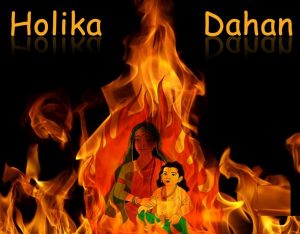
Holi celebrates the arrival of spring, the end of winter, the blossoming of love and for many, it is a festive day to meet others, play and laugh, forget and forgive, and repair broken relationships. The festival is also an invocation for a good spring harvest season. It lasts for a night and a day, starting on the evening of the Purnima (Full Moon Day) falling in the Hindu calendar month of Phalguna, which falls around the middle of March in the Gregorian calendar. The first evening is known as “Holika Dahan” or “Chhoti Holi” and the following day as “Holi”, “Rangwali Holi”, “Dol Purnima”, “Dhuleti”, “Dhulandi”, “Ukuli”, “Manjal Kuli”, “Yaosang”, “Shigmo”, “Phagwah”, or “Jajiri”.
Holi celebrations start on the night before Holi with a Holika Dahan where people gather, perform religious rituals in front of a bonfire, and pray that their internal evil be destroyed the way Holika, the sister of the demon king Hiranyakashipu, was killed in the fire. The next morning is celebrated as Rangwali Holi (Dhuleti) where people smear and drench each other with colours. Water guns and water-filled balloons are often used to play and colour each other, with anyone and anyplace being considered fair game to color. Groups often carry drums and other musical instruments going from place-to-place singing and dancing. Throughout the day people visit family, and friends and foes come together to chat, enjoy food and drink, and partake in Holi delicacies.
Nepali Community Program
Every Sunday, we have SATSANG (Bhajans, kirtans, Kathas etc.)
From 11:30 AM – 01:00 PM followed by Aarti and Prasadam (Lunch)
According to Hindu scriptures, Lord Brahma started the creation of the world from the month of Chaitra, which is regarded as the first month of the Hindu calendar. It marks the beginning of the new season when new flowers and fruits start to blossom. Chaitra month fall in March- April, when the Sun starts its journey through the Zodiac cycle. Some people believe that Goddess Durga descended on the first day of Chaitra Navratri and Brahma started the work of creation of the universe at the behest of Mother Durga. Another belief is that Lord Shiva allowed his wife Durga to visit her parent’s house for nine days (Chaitra Navratri). During these nine days, it is said that the Goddess killed demon Mahishasura. This signifies the victory of good over evil. It is customary for Hindu women to visit their parents’ home during this auspicious time.
Maharashtran Hindus refer to the festival, observed on the same day, as Gudi Padwa (Marathi: गुढी पाडवा).
The Sindhis celebrate the same day as Cheti Chand, which is the beginning of their calendar year.
Manipuris also celebrate their New Year as Sajibu Nongma Panba on the same day.
The Hindus of Bali in Indonesia also celebrate their new year on the same day as Nyepi.
Ugadi is one of the five Hindu national public holidays in Mauritius